There's the parent whose needs organize the entire family's schedule. The team lead whose approval everything waits on. The friend whose emotional state determines whether the group can relax. The colleague who somehow holds veto power over decisions they're not officially authorized to make.
When we talk about power imbalance in relationships, we usually frame it as a personality problem. Someone is too controlling. Someone is too passive. Someone needs to set better boundaries. Someone needs to be more assertive.
We send people to therapy to work on their individual patterns. We coach them on communication skills. We tell them to advocate for themselves, to delegate better, to stop people-pleasing.
And sometimes nothing changes. The people are trying. The effort is real. The problem is that we're applying individual solutions to a structural condition.
The Architecture of Influence
Power lives in position.
When someone becomes a critical node in a network, the person through whom most information flows, the person most connections depend on, the person whose presence or absence fundamentally changes system behavior, they accumulate influence regardless of intention. Network science calls this centrality (Freeman, 1978). And it creates dynamics that personal boundary-setting alone will never resolve.
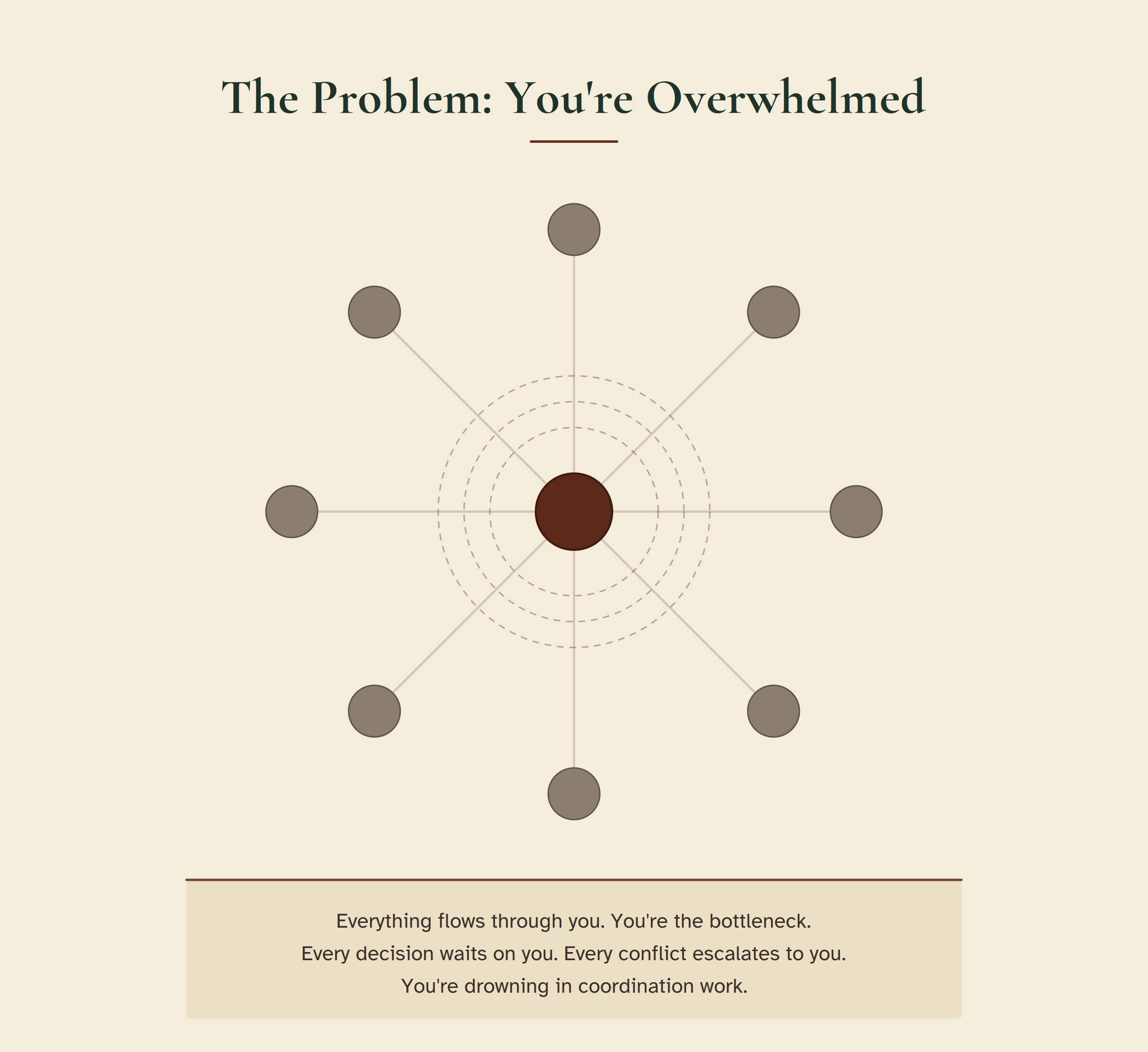
Think about the manager who becomes a bottleneck. Every decision needs their input. Every conflict escalates to them. Every question routes through them. They are probably drowning. But the network structure has made them indispensable, and that structural position generates power whether they want it or not.
Or the family member whose emotional volatility everyone learns to manage around. The network reorganizes itself to minimize disruption. People start checking in with each other before raising certain topics. Side channels form. Information flow becomes constrained. The person never explicitly demanded this arrangement. The network adapted to structural reality.
This is what individual-level psychology misses: the shape of the network itself creates and maintains imbalance.
When "Flat" Structures Hide Hierarchies
Organizations love to announce they're "flat." Families claim everyone's voice matters equally. Friend groups insist there's no leader.
Network analysis tells a different story. You can map actual communication patterns (who talks to whom, who gets consulted, whose input changes outcomes) and discover invisible hierarchies that have nothing to do with org charts or stated values (Krackhardt, 1990).
The Star Network: One central node connected to everyone, while people on the periphery barely connect to each other. Officially "collaborative." In practice: complete dependence on the center. When the center is unavailable, the whole system stalls.
The Clustered Network: Tight subgroups with sparse bridges between them. Information pools in silos. The person who bridges clusters accumulates enormous informal power, because they control what gets shared across boundaries (Burt, 1992).
The Chain: Information flows linearly. Break one link, lose whole segments. The person positioned at the junction point between segments can gate-keep, filter, or completely block flow.
None of these require anyone to be trying to dominate. The structure creates the imbalance.
Why Boundaries Alone Miss the Problem
"Just set boundaries" assumes the problem is individual capacity or willingness.
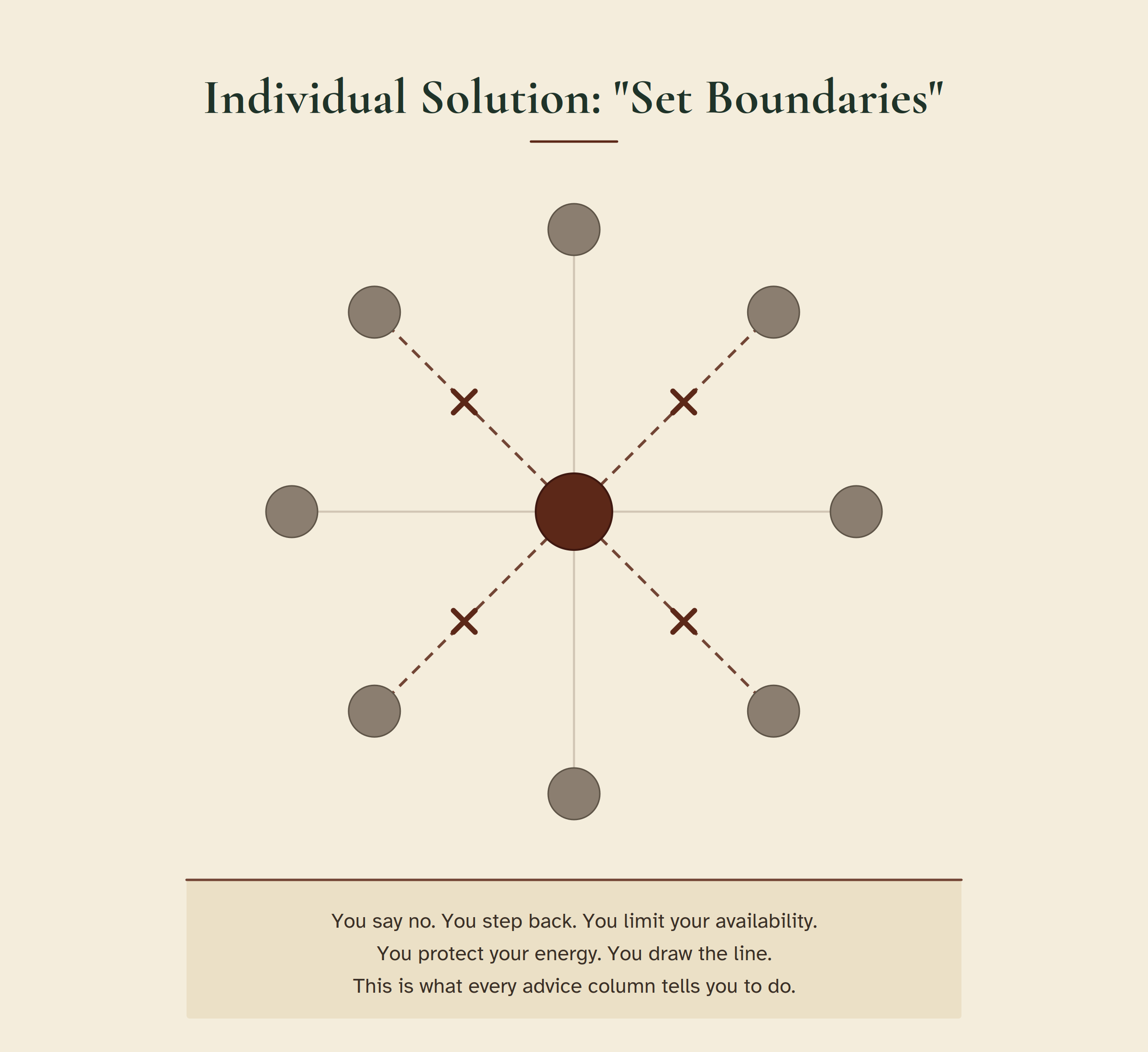
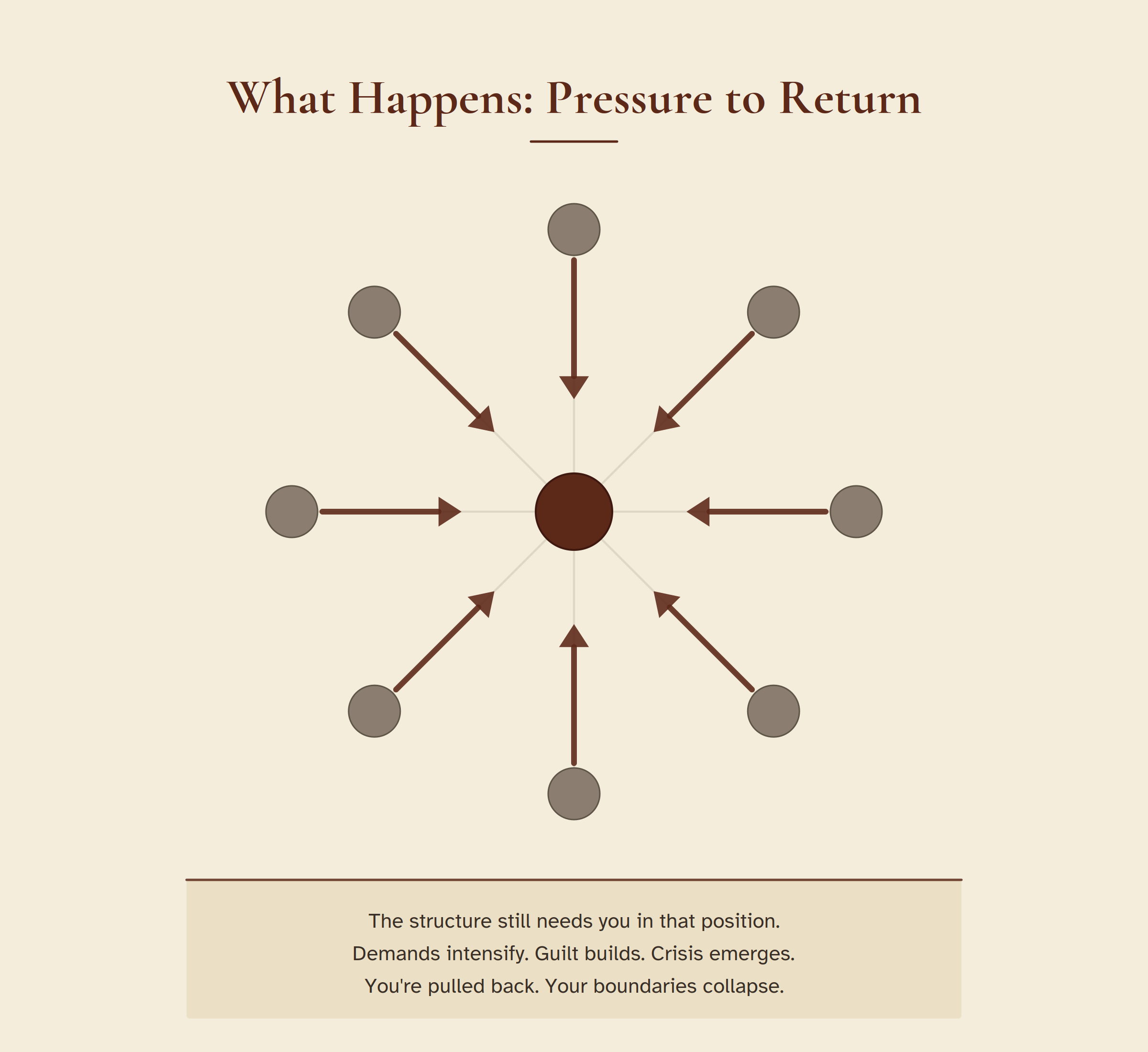
But what happens when you're the only bridge between two parts of a network that need to coordinate? Setting boundaries might protect you temporarily, and the structural dependency remains. The system will either route around you (if possible) or pressure you back into position (if the structure permits nothing else).
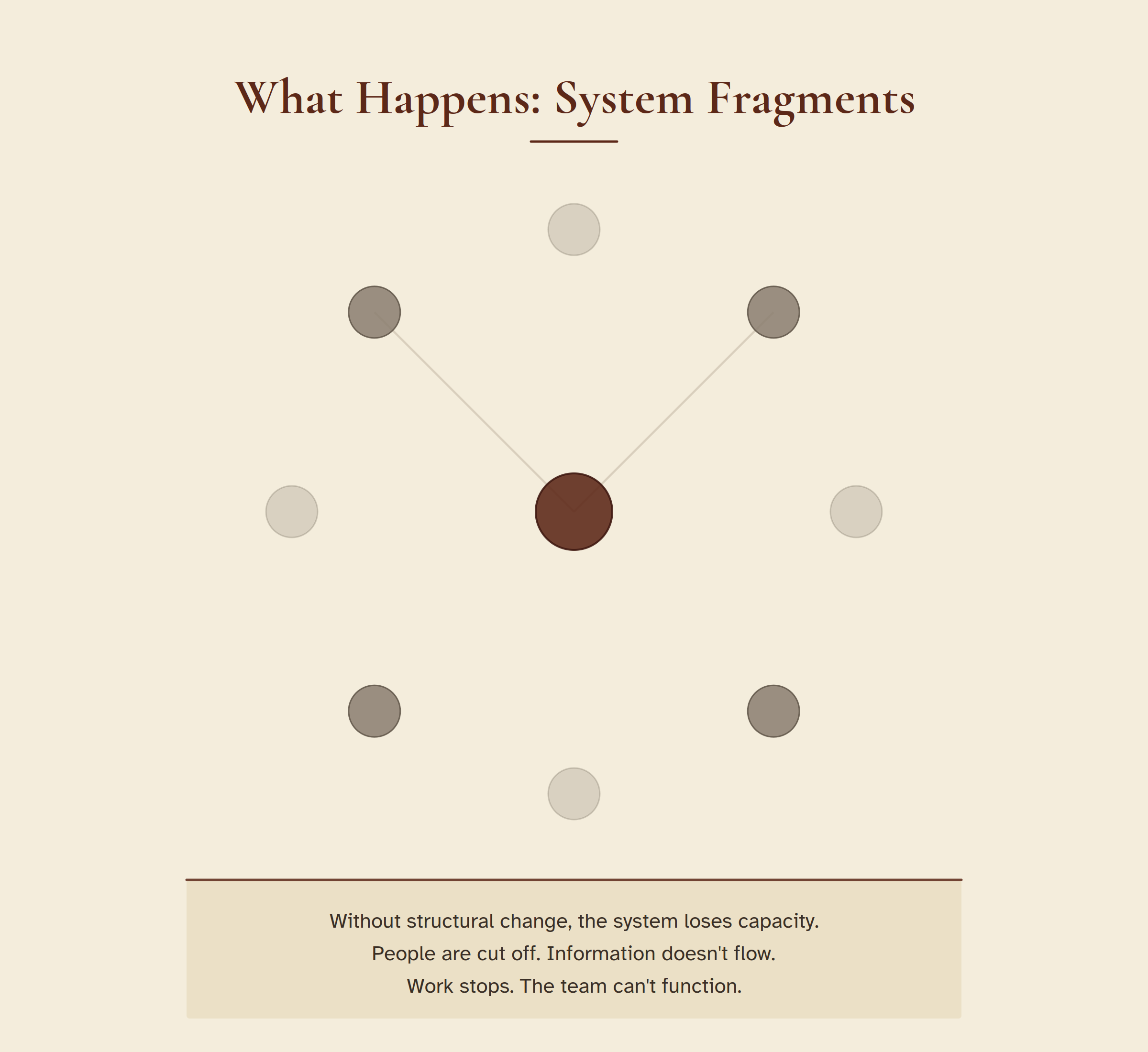
Consider a family where one person's needs genuinely require more accommodation, like chronic illness, disability, crisis, and there's no structural support to distribute that load. Telling everyone to "advocate equally for their needs" doesn't create the missing infrastructure.
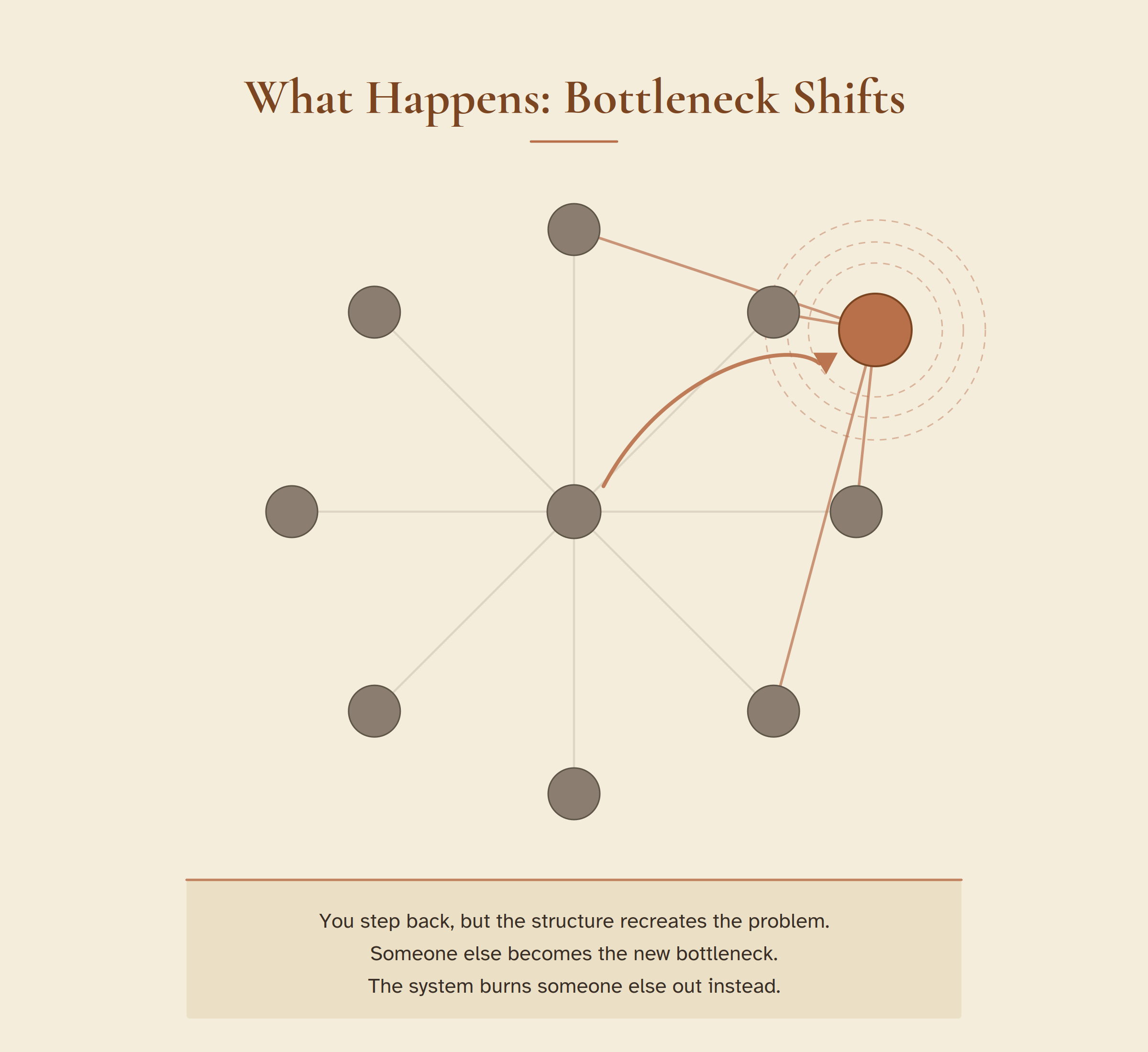
Consider a team with a genuine skills imbalance, where one person actually is the only one who can do certain critical things. Individual boundary-setting doesn't build capacity elsewhere. It exposes the structural vulnerability.
This is why relational work that ignores network structure often fails. You can't redistribute power that lives in architecture by adjusting individual behavior alone.
What Systems Thinking Offers
When you start seeing relationships as networks, different intervention points become visible (Meadows, 2008).
The question "Why is this person so controlling?" becomes "What dependencies in this network make their position central? What would need to change for influence to distribute differently?"
The question "Why can't they assert themselves?" becomes "What would it take for this person's position in the network to carry more structural weight? What connections or capabilities are missing?"
The question "Why do I keep getting pulled into this role?" becomes "What pattern in this network keeps recreating this position? What would interrupt that structural tendency?"
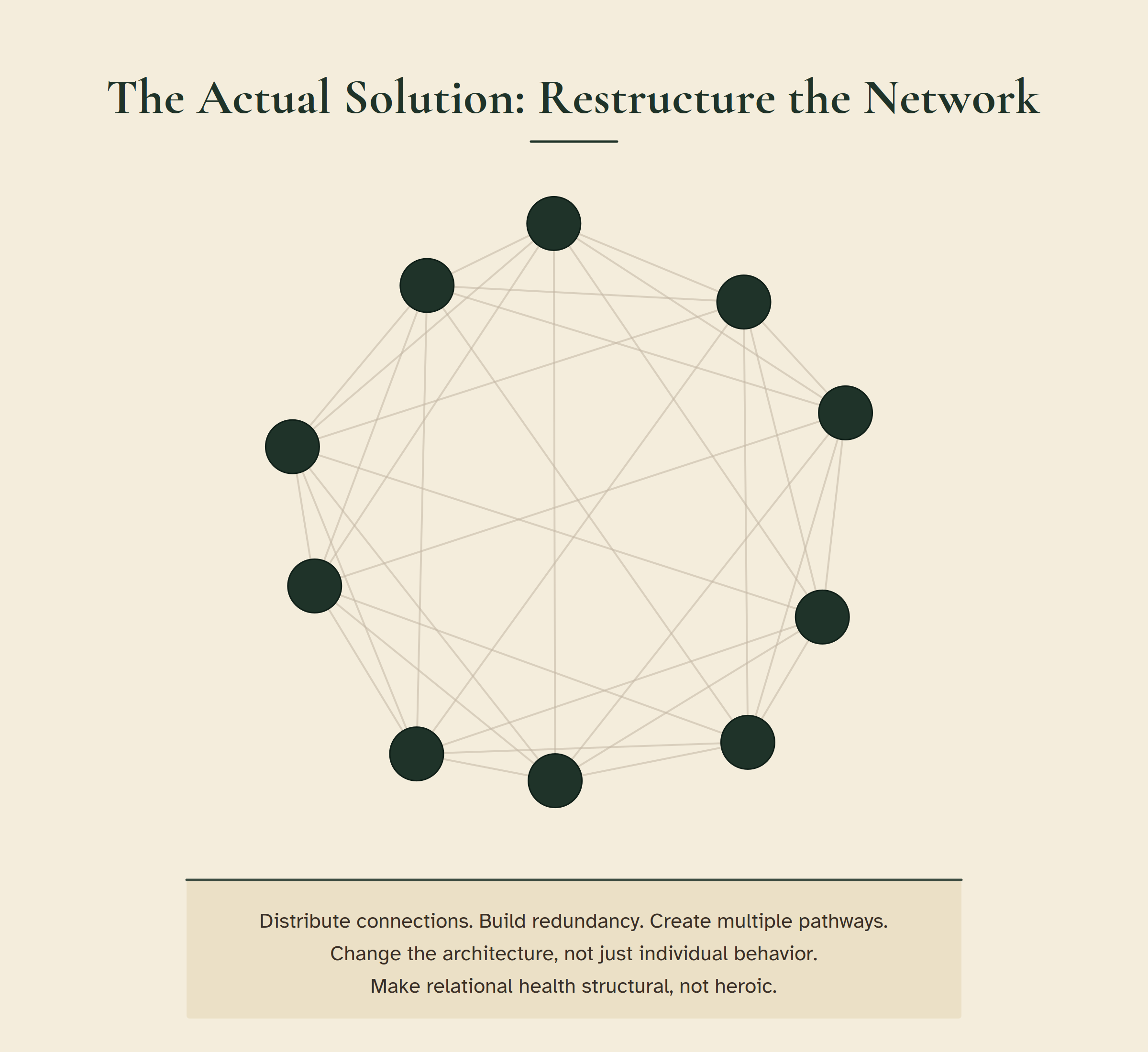
You're no longer debugging personalities. You're examining architecture. And architecture can be redesigned through deliberate structural intervention: adding redundant pathways, distributing coordination functions, building capacity at the periphery (Cross & Parker, 2004).
The Relational Ecosystem Level
Once you see network structure, patterns become visible across domains.
The person who's a bottleneck at work might also be the emotional center of their family and the organizer of their friend group. They might have a perfectly ordinary personality. What they have is skill at coordination, and networks naturally concentrate coordination functions in the people who perform them well. The structure recruits them into the same position everywhere.
The person who struggles to be heard might be structurally peripheral in multiple contexts, and the peripherality compounds: they haven't developed the connections, the bridging capacity, or the information access that creates structural influence. They carry a network position, repeated across settings, that they've learned to experience as a personality trait.
These patterns replicate because we misread them. We think we're dealing with personality when we're actually dealing with network positions we keep recreating.
Relational well-being operates at the ecosystem level. Healthy networks have distributed centrality (multiple centers, reducing single points of failure), redundant pathways (information and support flowing through multiple routes), appropriate clustering (local cohesion that avoids isolation), and structural balance (stable patterns that don't require constant individual compensation).
When these properties exist, relational health becomes easier to maintain. When they're absent, even highly skilled individuals struggle.
Learning to See the System
Most of us have never been taught to think about relationships this way.
We learn psychology, how individuals work. We learn communication skills, how to interact better. We learn conflict resolution, how to repair ruptures. We rarely learn systems thinking, which is how to recognize the structural patterns that shape what's even possible in the first place (Meadows, 2008).
Once you learn to see networks, you start noticing when you're being asked to solve a structural problem with individual effort. You start recognizing bottlenecks before they become crises. You develop a vocabulary for something you've always sensed but couldn't quite name: the architecture of connection itself.